Top 5 Reasons AEC Firms Lose Repeat Clients (And How to Prevent It)

April 2, 2026
Top 5 Reasons AEC Firms Lose Repeat Clients (And How to Prevent It)
AEC firms lose repeat clients to five core issues—a client experience (CX) gap, ineffective communication, failure to demonstrate business value, quality/delivery problems, and high staff turnover—which collectively erode revenue, referrals, and long‑term profitability even when individual projects finish on time and under budget.
Major CX and perception gaps are widespread: 80% of professional services leaders believe they provide above‑average experiences while only 8% of clients agree, and 78% of AEC clients rate a smooth, transparent customer experience as essential when choosing a firm.
Poor communication and weak value demonstration turn technically acceptable work into transactional relationships—78% of clients cite communication as a main dissatisfaction driver and 86% say they will pay more when experience and perceived value stand out.
The financial impact is significant: losing repeat clients erases multi‑project revenue and referral pipelines, reduces future case‑study opportunities, and forces firms to re‑incur high acquisition costs (about $1,780 for engineering firms and $4,200 for construction firms) despite retention typically costing far less (often 5–25× cheaper).
Actionable prevention includes milestone‑based feedback and NPS tracking, closing the feedback loop, proactive communication rhythms, quantifying delivered impact, multi‑threaded client relationships, and leveraging specialized tools like Client Savvy, which reports a 17‑point average NPS increase, 4× more pain points discovered, 83% of at‑risk clients retained, and $1.8M in referral revenue from activated promoters.
%20(1).png)
- AEC firms often lose repeat clients because issues such as weak communication and unnoticed CX gaps accumulate quietly.
- That silence becomes costly when you remember that acquiring a new client can run as high as $4,200 for construction firms.
- These gaps make it harder to show value, protect relationships, and prevent clients from slipping away, which is why tools like ClearlyRated help firms stay ahead.
- Firms that act on feedback early keep more clients, unlock stronger referral chains, and turn retention into predictable growth.
Your last project finished on time and under budget. The client thanked you. Then they hired someone else for the next phase. Sound familiar?
For architecture, engineering, and construction (AEC) firms, winning a client once is only half the battle. The real challenge and real profit come from retaining them. Repeat clients are often 5x more profitable than new acquisitions, yet many AEC firms struggle with client churn because they fail to track the AEC client experience metrics that reveal early warning signs.
Often, clients leave quietly, without complaints, leaving firms unaware of the lost revenue and missed opportunities for referral work. In fact, the cost to acquire a new client averages $1,780 for engineering firms and $4,200 for construction firms.
When businesses invest this much in acquiring customers, they prioritize retaining them because every lost customer translates into not just lost revenue but wasted efforts, unrealized growth, and the risk of negative word-of-mouth.
This article explores the top five reasons AEC firms lose repeat clients, why they happen, and actionable strategies to prevent them.
The Real Cost of Losing Repeat Clients in AEC
When your AEC firm loses a repeat client, it is more than just a missed project. The impact goes deeper, affecting revenue, growth potential, and future opportunities.
Lost revenue from multi-project relationships
Many AEC clients come with more than one project in the pipeline. When you lose such a client, you wipe out the value of several future engagements and force you to spend that acquisition cost all over again.
Referral chains that never materialize
In AEC, happy clients often result in warm referrals, the kind of leads that turn into significant projects with minimal acquisition cost. When a repeat client walks away quietly, those referral chains die. This eliminates an important source of organic, high-quality leads.
Given that many AEC firms lack formal business development or referral generation processes, this loss becomes even more painful.
Higher marketing and business development costs to replace churned clients
Replacing lost clients isn’t free. When you lose a client, you often mess up your marketing and business development (BD) efforts by sending more proposals and chasing new leads.
Meanwhile, retaining customers is far more financially efficient. In fact, it costs far less than acquiring new ones, sometimes 5 to 25 times less. This makes every lost client a double blow to your revenue and BD.
Portfolio case studies that never happen
Repeat clients often deliver the kind of multi-phase, complex projects that make great additions to the portfolio, including case studies, reference projects, and portfolios. Losing such clients deprives your firm of these valuable showcases.
Without strong recent case studies, your ability to win new clients, especially bigger or more strategic ones, disappears. Over time, this hinders market position, credibility, and long-term growth prospects.
Reason #1: The Client Experience (CX) Gap
Once you see how the CX gap damages relationships from the inside, you’ll realize why clients walk away and start to make even more sense.
What is the CX gap?
The CX gap remains one of the biggest challenges in professional services, especially in AEC. Most firms truly believe they put clients first and deliver outstanding experiences, yet most clients don’t see it that way.
Why does this disconnect persist? Because firms often judge their performance based on internal assumptions rather than on direct feedback from their clients. In fact, 80% of professional services firm leaders believe they provide an above-average client experience, but only 8% of clients agree.
How the CX gap manifests
Without a structured feedback program, many firms gauge client experience based on surface-level signals such as repeat work, the absence of complaints, or strong project delivery metrics. These indicators matter, but they rarely tell the whole story.
Our 2025 Benchmarks, Insights, and Trends: Client Experience in the AEC Industry report shows that 78% of AEC clients consider a smooth and transparent customer experience essential when choosing a firm. Similarly, 68% of clients value strong communication and relationship quality as much as technical expertise. When clients do not see meaningful change, they quickly recognize that their input had little impact. That realization weakens trust, even when the firm believes it is being proactive.
Firms also frequently mistake convenience or familiarity for true loyalty. A returning client is not necessarily a satisfied one, and may simply lack better alternatives. This assumption creates a significant blind spot that hides underlying vulnerabilities in the client experience.
The firms that actively implement structured client feedback and CX initiatives see the opposite pattern. Many report higher client retention and increased repeat business because they demonstrate that client input drives real improvements. Yet despite these results, nearly half of AEC firms still operate without a formal CX strategy, and only a small percentage (4.2%) have fully integrated CX into their core operations.
How to fix it
To close the gap between what firms believe clients experience and what clients actually feel, you can take several practical, actionable steps:
- Launch systematic, anonymous client feedback programs. Use short surveys or milestone-based check-ins so clients can speak freely without pressure.
- Measure and track Net Promoter Scores (NPS) or satisfaction scores, rather than relying solely on project delivery metrics. Review this data throughout the project, not just at the end.
- Close the feedback loop. When clients share ideas or concerns, show them how you act on their input. Even small changes strengthen trust and signal that their voice matters.
- Benchmark your CX against industry standards instead of internal assumptions. Use current AEC data or peer-firm comparisons to understand your position.
- Treat CX as a strategic priority rather than an optional add-on. Dedicate roles or teams, such as a CX strategist, to ensure client experience remains an active, evolving part of operations.
📌Also read: Best Architecture Client Feedback Tools to Use in 2026
Reason #2: Ineffective Communication and Lack of Engagement
Poor communication may start the drift, but here’s what often accelerates the client’s decision to leave:
The communication breakdown
Poor communication sits at the heart of AEC client retention problems, and it remains one of the top reasons architecture firms lose clients. Many firms reach out only when issues surface, which leaves clients feeling like they’re always bracing for bad news. In fact, a 2025 report found that 78% of AEC clients cite poor communication as the main reason for dissatisfaction, highlighting how critical proactive engagement is.
Long stretches of silence during extended project phases create uncertainty, especially when clients expect steady progress updates. Even when firms do communicate, they often rely on technical language that clouds rather than clarifies the message.
And when the project wraps, many firms go quiet again, creating awkward “radio silence” until the next opportunity appears. That silence is one of the most common reasons for AEC client churn, with 41% of projects experiencing client dissatisfaction directly due to poor communication.
The multi-stakeholder challenge
AEC projects rarely involve just one decision-maker. Owners, developers, contractors, and end users all expect different things. When firms don’t adapt their communication style for each group, messages can feel off-target or confusing.
Moreover, inconsistent messaging across internal team members adds friction. One person may promise one thing, while someone else shares conflicting information. This inconsistency casts doubt on alignment and reliability and is another major contributor to why AEC firms lose repeat clients.
Recent data highlights this further:
- Sixty-five percent of firms reported increased client retention after improving communication practices
- Forty-eight percent of clients value transparency and communication even more than cost
Clients also expect modern communication methods, with 60% preferring digital platforms and 68% expecting real-time updates during projects.
How to fix it
You can eliminate most communication-driven churn with simple, intentional habits:
- Establish proactive communication rhythms during project kickoff so clients know exactly when to expect updates.
- Build milestone-based update schedules that push information before clients ask for it.
- Track each client’s communication preferences so you reach them in the format, frequency, and level of detail they prefer.
- Assign a single point of contact to create continuity and prevent conflicting messages.
- Use visual updates, such as photos, renderings, and dashboards, to make progress clearer and more engaging.
When firms get this right, they dramatically reduce the reasons for AEC client churn and strengthen relationships that support long-term loyalty.

Reason #3: Failure to Demonstrate Value and Impact
When clients don’t clearly see the value you deliver, even a successful project can feel transactional. Here’s how.
The "acceptable work" trap
One of the most overlooked drivers of AEC client loyalty issues is the assumption that simply delivering on promises is enough. Clients want tangible results that advance their business. Too often, firms fall into the trap of providing “acceptable work” that fulfills the brief but fails to connect to broader objectives.
Clients may perceive your work as a cost rather than an investment. When deliverables are treated as transactions instead of solutions, the firm misses opportunities to highlight its actual impact. Without a clear value demonstration, even technically flawless projects can feel forgettable.
Why does the value get lost
Many firms focus heavily on technical specifications while neglecting the business impact of their work. They rarely communicate long-term benefits, such as return on investment (ROI), time savings, cost efficiencies, and risk reduction, or frame their deliverables as contributing toward broader client goals. As a result, they provide “acceptable work” that meets the brief but fails to show real business value, and clients may perceive it as a cost rather than an investment.
Clients clearly value more than technical compliance. In a 2025 survey, 86% of clients say they are willing to pay more when the experience, clarity, and perceived value of a firm’s service stand out. Yet wins and milestones are rarely celebrated in ways that reinforce the firm’s value. Without visible recognition of impact, such as quantified cost savings, efficiency gains, or strategic benefits, clients cannot appreciate the full value of the work.
All of these factors directly affect an architecture firm’s ability to retain clients, because clients who don’t perceive value are more likely to consider alternatives.
How to fix it
Showing impact consistently turns good work into long-term partnerships. When you highlight tangible outcomes, clients feel confident and appreciated, which strengthens loyalty and encourages repeat business. Here’s what you need to do:
- Frame proposals, progress updates, and final deliverables around client business outcomes instead of just tasks completed.
- Quantify the value delivered. Highlight cost savings, time efficiencies, risk mitigation, or performance improvements.
- Produce “value realization” reports at key project milestones to demonstrate measurable impact.
- Share industry insights, market trends, and strategic advice beyond the immediate project scope.
- Position your firm as a strategic partner, not just a vendor, so clients see you as invested in their long-term success.
📌Interesting read: AEC Client Research Myths
Reason #4: Quality or Delivery Issues and Mismanaged Expectations
When quality or delivery issues break trust, even the strongest relationships can weaken. Here’s how quality and delivery issues affect client relationships:
When "successful" projects still lose clients
Clients judge their experience based on expected quality, perceived quality, and actual outcomes. Minor frustrations during the process, including missed updates, unclear decisions, or minor inefficiencies, can overshadow even a technically successful final product.
A 2025 industry survey of AEC firms found that 77% report missing deadlines, often due to poor project information management, fragmented workflows, or ineffective internal coordination. This shows that even when firms intend to meet schedules, delivery issues are common.
Common expectation mismanagement scenarios
Unmet expectations often come from simple oversights rather than major failures. Small issues quietly accumulate, becoming a key driver of AEC client churn. For example:
- Unclear scope definitions can lead to surprise costs.
- Repeated design revisions may feel like starting over.
- Regulatory delays or poorly communicated change orders frustrate clients.
Other issues, like change orders perceived as “nickel-and-diming,” also break trust.
How to fix it
Preventing misunderstandings is far easier than repairing a broken relationship. Taking these steps helps clients feel understood and respected, which encourages long-term trust and repeat engagements. Here’s how you can do it:
- Set realistic expectations from the very start during the proposal phase.
- Overcommunicate potential risks and mitigation strategies so clients feel informed rather than caught off guard.
- Create transparent processes for handling change orders and scope adjustments.
- Document decision-making rationale to answer questions like “Why did we do it this way?” before they arise.
- Implement formal expectation-alignment checkpoints at each project phase to catch misunderstandings early.
Reason #5: High Staff Turnover and Loss of Key Relationships
When staff turnover threatens the relationships clients rely on, it highlights just how fragile client loyalty can be, and why a firm-wide strategy is essential to retain and grow repeat business.
The relationship fragility problem
Clients don’t hire firms. They hire people.
When a key project manager, designer, or engineer leaves, the relationship they cultivated can vanish overnight. Knowledge transfer gaps and lost project history make it difficult for the firm to maintain continuity, leaving clients frustrated and questioning whether the firm truly understands their needs.
The single point of failure
Clients often follow "their architect" or "their engineer" to another firm if that person departs. Without strong institutional documentation of client preferences, history, and communication style, new team members are forced to start from scratch.
This creates a weak link that can accelerate client churn and directly contribute to AEC client loyalty issues.
How to fix it
Building resilience into client relationships prevents single points of failure. When you implement these changes, clients feel supported and confident, which leads to stronger loyalty and reduced churn. Here’s how:
- Develop multi-threaded client relationships so several team members understand and engage with the client.
- Document client preferences, project history, and communication styles in a CRM or knowledge management system.
- Implement formal transition protocols whenever team members leave.
- Introduce backup contacts early so clients know they have continuity.
- Invest in retention strategies for top-performing, client-facing staff.
- Make firm-level relationship value visible through systems, processes, and bench strength, so relationships live beyond any single individual.
What Clients Say vs. What Firms Think
Sometimes the biggest challenge isn’t the work itself, but the perception. What firms think they are delivering often looks very different to clients. Here’s a snapshot of that disconnect across the five reasons:
Understanding these perception gaps helps you identify which clients are at risk before they leave.
ClearlyRated: Identify At-Risk Clients Before They Leave
Standard survey tools can’t capture the complexity of professional services. When paired with a robust CRM platform, feedback becomes far more powerful. Feedback tells you what is happening, while CRM tells you who it is happening to, when, and where in the client lifecycle.
Our Client Savvy platform is built specifically for AEC and professional services firms. It integrates directly with project workflows, closes feedback loops, and empowers leaders to act on insights that drive satisfaction, loyalty, and referrals.
Early warning system: Detect dissatisfaction before the contract ends
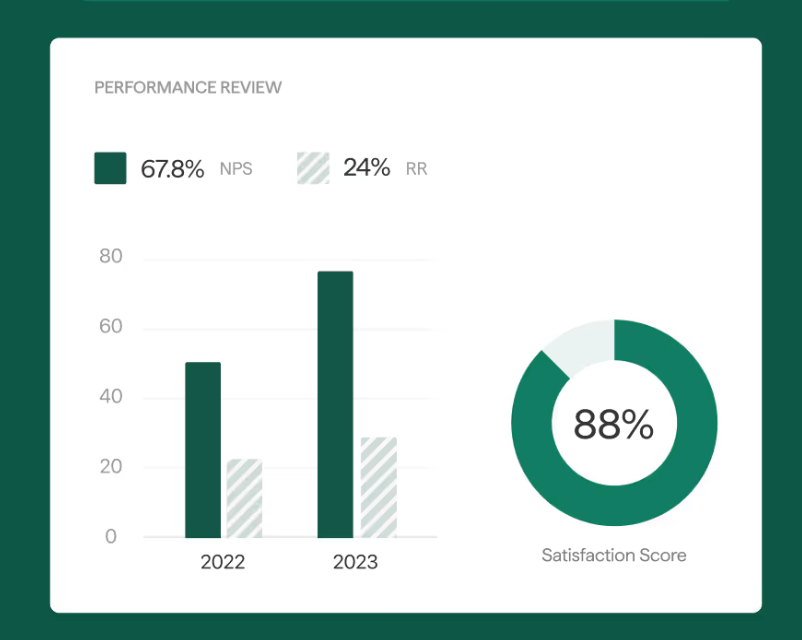
Silent churn is a major threat in professional services. In fact, up to 25% of clients have unvoiced complaints, and 7% are at risk of leaving without notice.
Standard surveys miss these issues, but the Client Savvy platform identifies dissatisfaction before contracts end. By monitoring client feedback at multiple points throughout the project lifecycle, the platform highlights friction points and tracks project and client health. It also alerts the team to act before frustration turns into lost business.
Automated NPS tracking across project milestones
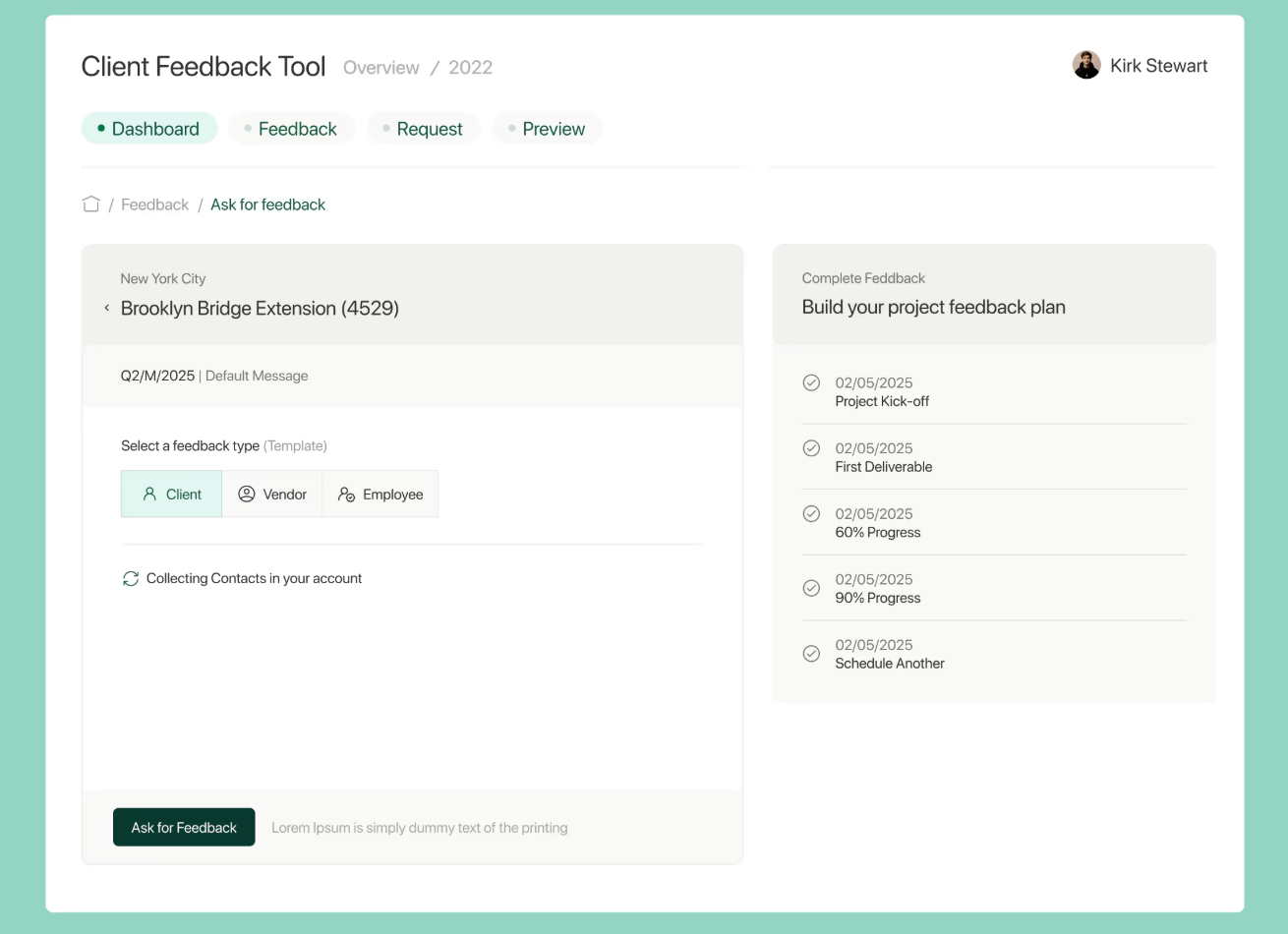
The Net Promoter Score (NPS) is valuable, but traditional tools only give a snapshot in time. The Client Savvy platform automates NPS tracking at each project milestone, capturing the evolving client sentiment and providing actionable insights.
AI categorizes open-ended responses, measures emotions, and identifies at-risk clients, enabling firms to respond strategically and maintain strong client relationships. Firms using the platform see an average 17-point increase in NPS through continuous, milestone-based tracking.
📌Suggested read: 12 Ways to Improve Your Net Promoter Score (NPS)
Benchmark your retention rates against 500+ AEC firms
The Client Savvy platform not only measures your firm’s performance but also benchmarks it against more than 500 AEC firms, giving context to your retention and satisfaction metrics.
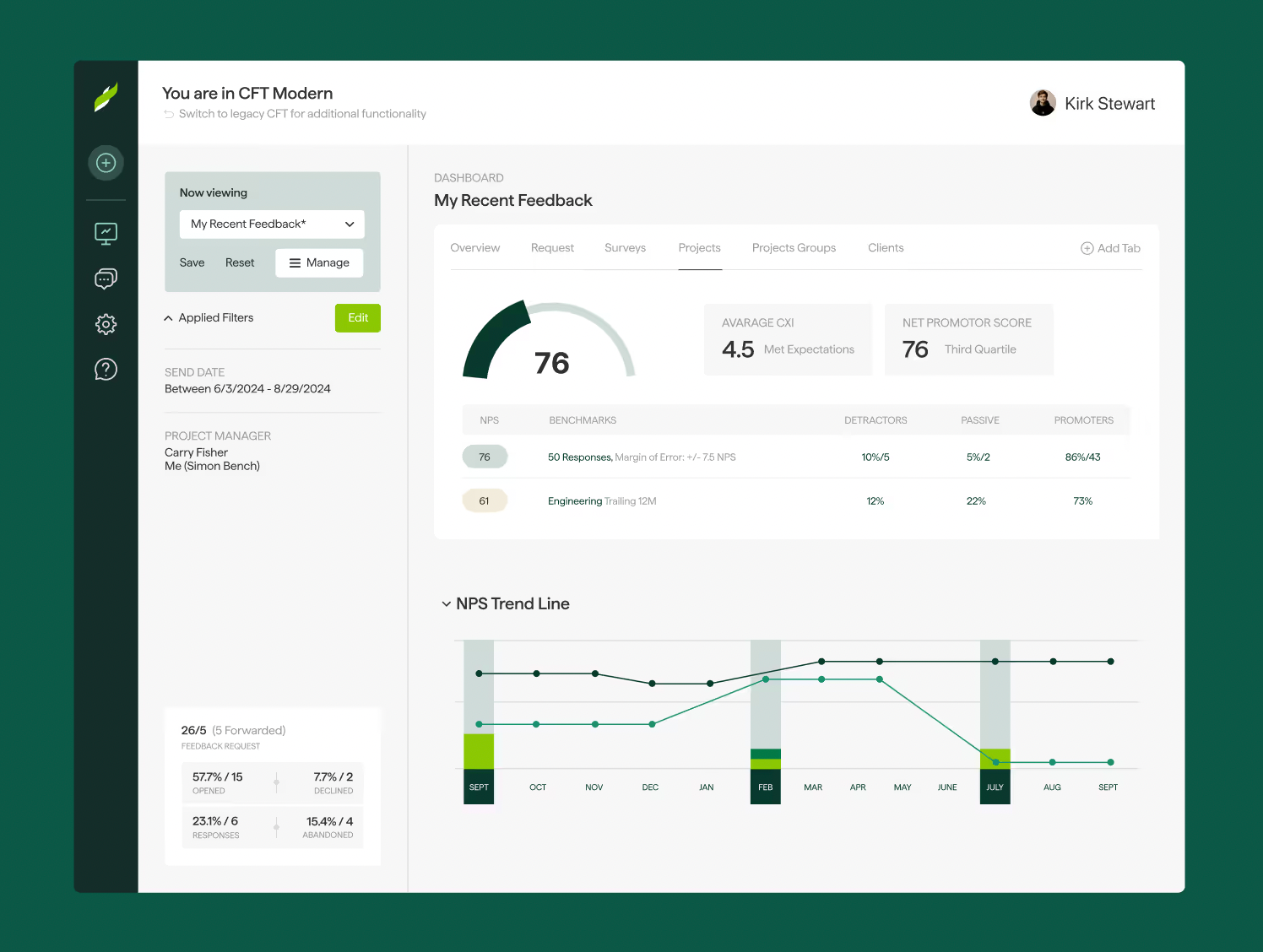
By comparing your outcomes to industry peers, you can identify strengths, uncover areas for improvement, and develop strategies to increase repeat business and reduce churn. This benchmarking ensures your firm stays competitive and client-centric in a crowded marketplace.
Some of the key results reported by firms using the platform include:
- 4× more pain points discovered compared to traditional NPS surveys, helping identify issues before they escalate
- 83% of at-risk clients retained by addressing hidden frustrations through closed-loop accountability
Convert promoters into portfolio-building advocates
Happy clients can drive significant new business if activated correctly. The Client Savvy platform identifies promoters and provides tools to convert them into advocates who generate referrals and expand your portfolio.
On average, firms that activate promoters using the platform see $1.8 million in new business from referrals. By strategically engaging promoters, you maximize the lifetime value of your client relationships and strengthen your market reputation.
Client Retention Is a Proactive Strategy, Not Luck
Understanding why engineering firms lose repeat business requires insight. AEC firms that actively measure, monitor, and act on client feedback outperform those that rely on assumptions. By addressing the CX gap, communication lapses, perceived value, quality issues, and relationship fragility, firms can retain more clients, improve referrals, and grow profitably.
ClearlyRated provides the tools AEC firms need to take control. The platform captures milestone-based feedback, identifies at-risk clients, and activates promoters. It turns client insights into actionable strategies that strengthen loyalty, reduce churn, and generate new business opportunities.
Get started now and transform your client retention strategy from reactive to proactive.
FAQs
What’s the average client retention rate for AEC firms?
Industry‑wide benchmarks suggest that firms in the construction and engineering sector (including AEC) average about 80% annual client retention.
How can AEC firms prevent clients from leaving without warning?
Clients should proactively collect and act on client feedback throughout the project lifecycle. ClearlyRated helps by enabling milestone‑based surveys, tracking satisfaction trends, and surfacing at‑risk clients early, giving firms time to repair relationships before contracts end.
What’s the difference between client satisfaction and client loyalty in architecture and engineering?
Client satisfaction means a project met expectations, was delivered on time and on budget, and delivered quality. Client loyalty means the client values the firm enough to return, refer others, and stay long-term. It reflects trust, relationships, and perceived value beyond a single project.

FAQs


.webp)
.png)