What Is Customer Journey Management and Why It Matters

April 2, 2026
What Is Customer Journey Management and Why It Matters
Customer journey management is the ongoing, data-driven practice of researching, measuring, designing, and optimizing the end-to-end client experience so every interaction delivers value and builds loyalty.
Operational delivery alone is insufficient because small failures—missed updates, unclear expectations, slow responses—erode trust and drive churn (e.g., 55% of consumers switched after being overwhelmed by messages and 52% have stopped buying due to bad experiences), while B2B buying cycles average 211 days, involve 6.8 stakeholders and roughly 76 touchpoints, amplifying risk.
Unlike one-time journey mapping, journey management is a cross-functional, continuous discipline that uses real-time feedback and ownership to close gaps and deliver measurable outcomes—firms with journey programs report >50% higher marketing ROI, 2.5x more referral revenue, and are far likelier to achieve above-average growth.
Effective programs combine five core components—journey discovery and mapping, real-time event-triggered feedback, cross-functional alignment and action, benchmarking, and continuous optimization—and deliver demonstrable lifts in NPS and customer retention (e.g., daily feedback programs report average NPS of 66 versus benchmark 36 and structured feedback can raise NPS by ~17 points).
B2B service firms should operationalize journey management with purpose-built tools, continuous listening, and benchmarking to prevent silent churn, strengthen retention and referrals, and create more predictable revenue.
If you deliver projects on time and within budget, why do some client relationships still feel fragile?
While teams measure success by scope completion and revenue collected, clients remember something else. They remember missed updates, unclear expectations, and moments when no one responded quickly enough. Those small interactions shape loyalty more than any proposal presentation or kickoff call.
According to a recent survey, 55% of consumers say they have switched to a competitor after being overwhelmed by too many messages, even when they previously considered themselves loyal. That gap between operational performance and perceived experience explains why customer journey management has become a boardroom priority in 2026. Leaders no longer view customer experience as a soft metric. They see it as a measurable growth driver tied directly to retention, referrals, and revenue predictability.
In this article, we will explore what customer journey management is, why it matters now, and how managing the full customer journey intentionally can strengthen retention, increase referrals, and create more predictable revenue.
What Is Customer Journey Management?
Customer journey management is the ongoing practice of researching, measuring, designing, and optimizing the end-to-end client experience. It is how companies actively ensure that every interaction a client has with their business delivers value and builds loyalty.
Many people confuse customer journey management with customer journey mapping. Put simply:
- Mapping is a one-time visualization of the journey, a snapshot of how clients move through your process.
- Management, on the other hand, is an operational discipline. It is continuous, data-driven, and focused on improving experience across the entire customer lifecycle.
Companies that build formal journey programs see measurable impact. For example, a recent report suggests that firms with journey management programs achieve more than 50% higher return on marketing investment than those without such programs. That lift changes how leaders think about measuring customer experience because it ties directly to revenue.
The complexity grows even deeper in B2B. Recent research shows today’s typical B2B buying journey involves 6.8 buyer stakeholders across multiple channels and roughly 76 touches before a purchase is made, highlighting how far journeys have evolved beyond simple funnels.
For B2B service firms, the journey is not a simple checkout funnel. It is an engagement lifecycle that begins with the RFP response and includes onboarding, project delivery, feedback, renewal, and referral. At ClearlyRated, we manage this journey by capturing feedback at critical touchpoints through event-triggered client feedback surveys for B2B firms. These insights enable teams to continuously measure customer experience and make improvements that drive loyalty and growth.
What Is the Customer Journey?
The customer journey represents every interaction a client has with your brand across the full engagement arc. These interactions happen at specific customer touchpoints, which include meetings, proposals, invoices, onboarding calls, project reviews, and renewal conversations.
Most journeys move through five core stages:
- Awareness
- Consideration
- Onboarding
- Retention
- Advocacy
In B2B, those stages stretch across months or even years. Dreamdata reports that B2B buying cycles average 211 days from first touch to revenue and involve 76 touchpoints across 3.7 channels. That complexity explains why siloed teams often lose visibility across the experience.
Similarly, personalization drives outcomes at every stage. Hotels with personalized guest experiences see a 20% increase in satisfaction scores, and 75% of guests say they want personalized recommendations during their stay. These expectations now carry into B2B relationships as well, where relevance and tailored engagement matter across long, complex journeys.
When clients interact across email, meetings, digital platforms, and live conversations, they expect continuity. They do not care how your internal departments divide responsibilities or how the experience feels. This fuels customer experience (CX) management, which operationalizes consistency across departments and channels.
Customer Journey Mapping vs. Customer Journey Management
Many firms start with customer journey mapping. They gather teams in a workshop, sketch stages on a whiteboard, and identify gaps. This exercise delivers value and clarifies blind spots and assumptions.
However, customer journey management goes much further. Instead of stopping at visualization, it turns insight into action. It establishes ownership, defines measurable outcomes, and continuously improves the experience using real customer data.
The difference becomes clear when you compare the two approaches:
Mapping alone does not guarantee improvement. Customer journey management helps you improve it, and improvement is where most companies struggle. In 2025, Forrester reported that more brands declined in customer experience quality than improved, which shows that awareness alone does not protect loyalty or drive meaningful improvement.
Additionally, 70% of executives say customer expectations are evolving faster than their company can adapt, and 29% of consumers have stopped buying from a brand due to poor experience. These findings show that many organizations still fail to manage critical touchpoints effectively.
If you want progress, you must move from static mapping to disciplined management that actively measures customer experience and strengthens every stage of the customer lifecycle.
Why Customer Journey Management Matters
The most common mistake companies make is assuming that delivering projects or services is enough to keep clients loyal. However, it is the small failures that destroy trust.
Teams miss updates, send unclear messages, and fail to respond quickly. These moments quietly erode loyalty, margin, and growth long before anyone notices in a report.
- Higher profits from customer centricity: It’s well known that customer-centric brands achieve stronger financial results. In fact, 52% of consumers say they have stopped buying from a brand because of a bad experience, and 29% specifically cite poor customer experience as their reason for leaving. This shows that strong experience increases revenue, while poor experience accelerates churn.
- Retention protects margins: Forbes reports that acquiring a new customer costs five times as much as retaining an existing one. When firms invest in structured customer journey management, they reduce churn risk and protect profitability.
- Referrals compound growth: Companies with journey management programs generate 2.5 times greater revenue from customer referrals. Referral revenue scales faster and costs less than paid acquisition, which makes it one of the most efficient growth levers available.
Our clients demonstrate this impact in practice. For example, TekCom Resources increased its gross profit margin by 18.6% and referral generation by 50% using structured journey feedback. These results indicate firms that measure CX ROI systematically are 94% more likely to achieve above-average growth. When leaders connect experience data to revenue outcomes, they stop treating CX as a soft metric and start managing it as a strategic growth driver.
This shift explains why B2B firms must prioritize CX in 2026. Leaders who ignore experience risk invisible churn that quietly destroys long-term growth.
Key Components of Effective Customer Journey Management
The most effective customer journey programs succeed because they treat the experience as an ongoing discipline, not a one-off project. Firms that rely on occasional mapping or yearly surveys often miss critical friction points and lose clients without realizing it.
To build loyalty, reduce churn, and capture growth, companies must focus on five core components that together create a living, data-driven journey.
1. Journey discovery and mapping
It starts with understanding who your clients are, what they need at each stage, and where friction exists. Many customers make decisions based on their experience, and 76% of consumers have chosen one brand over another solely because of the quality of service.
B2B buying cycles are long and complex, averaging 211 days from first touch to revenue and involving 76 touchpoints across nearly four channels. That complexity makes it easy for friction to hide.
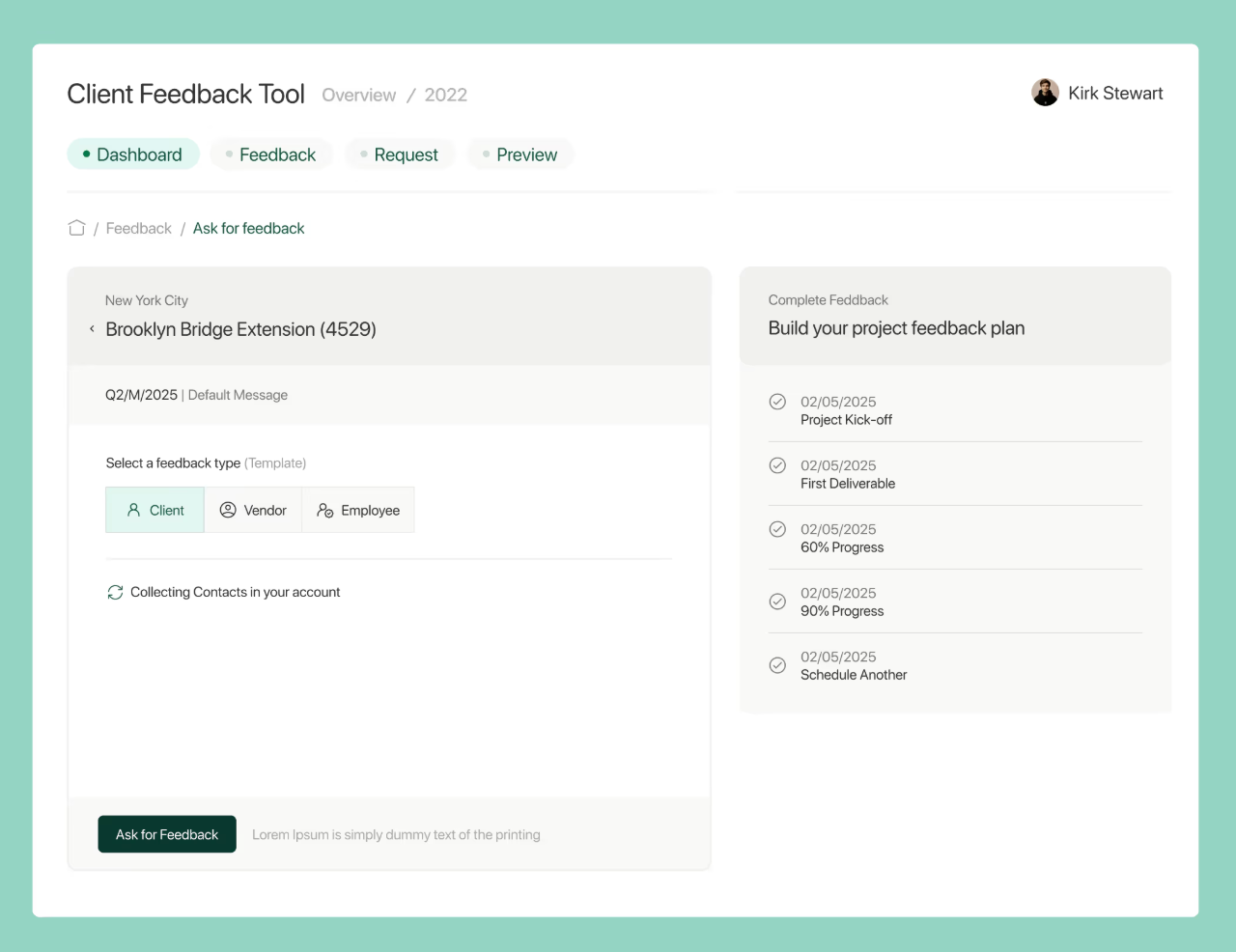
Structured journey discovery captures these hidden pain points. Our patented Client Experience Indicator (CXI®) scale captures up to 380% client pain points than NPS alone. Across industries, only 8% of clients believe their experience matches what leaders think it does. That gap explains why CX programs fail when leaders rely on assumptions.
Firms using our ongoing feedback model have seen an average 17-point increase in their Net Promoter Scores (NPS). Structured listening directly drives stronger relationships and repeat projects. A clear customer journey mapping guide gives teams structure, but management ensures follow-through.
2. Real-time feedback and measurement
Once you know where an issue exists, you need to measure it continuously. Annual surveys miss critical gaps, but touchpoint-triggered feedback captures them as they occur. 64% of customers expect companies to respond and interact with them in real time, showing how crucial real‑time measurement and response have become across industries.
Firms that check in with clients daily see dramatic results. For example, professional services firms that measure feedback every day earn an average NPS of 66, compared with the industry benchmark of 36, according to our 2025 Staffing Buyer Insights Report. Frequent, proactive touchpoints show clients they matter. Yet, many companies only respond when problems arise, leaving clients feeling overlooked.
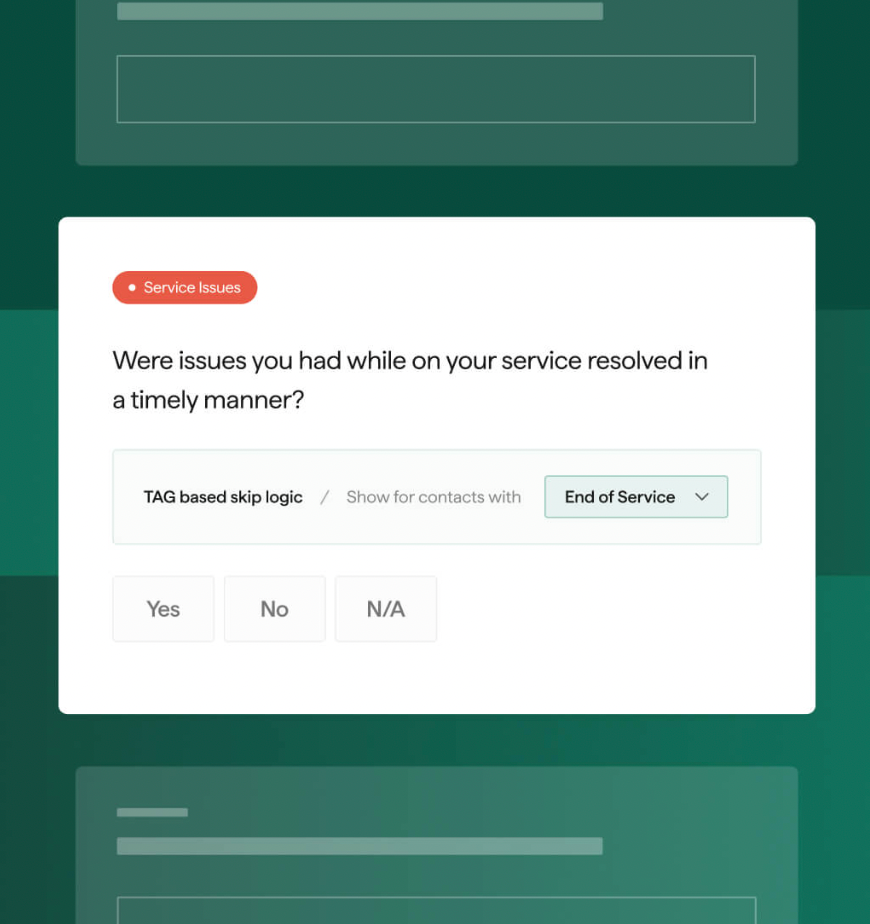
Daily, proactive touchpoints show clients that their input matters and that their concerns will be addressed. Event-triggered surveys capture feedback during onboarding, project milestones, delivery handoffs, and renewals, allowing teams to act immediately. For example, if feedback highlights delays during onboarding, leaders can allocate additional support or automate touchpoints to prevent recurrence.
Over time, this habit transforms experience from reactive to proactive, turning client feedback into measurable improvements in satisfaction and loyalty.
3. Cross-functional alignment and action
Customer journey management cannot live in a single department. Every team, from sales and delivery to operations and leadership, must see feedback and act on it together.
In fact, 79% of customers expect consistent interactions across departments, yet 55% report their experience feels fragmented. Only 14% of large B2B companies achieve true customer-centricity.
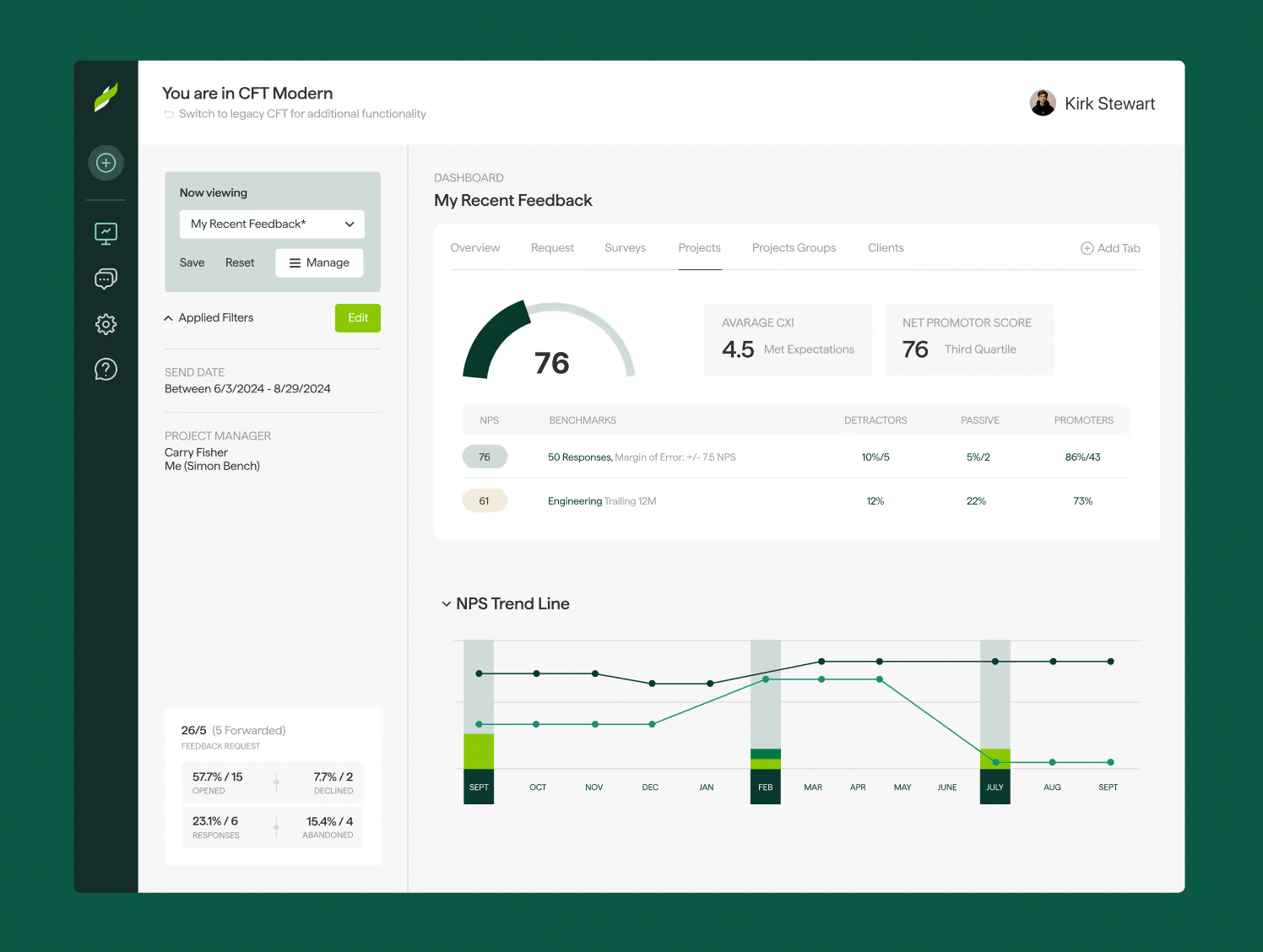
Real-time dashboards give teams shared visibility, provide alerts, and enable closed-loop workflows. When issues are identified proactively, firms save 83% of at-risk clients. Cross-functional action turns insights into outcomes, ensuring that small failures do not silently affect loyalty.
4. Experience measurement and benchmarking
You cannot improve what you do not measure, and benchmarking provides the context you need. In 2025, Forrester surveyed over 275,000 customers across 478 brands, 13 industries, and 13 countries, and found that NPS fell for 20 out of 39 industry-country combinations, increased in only three, and remained level in 16. This shows that customer experience quality is dropping for many brands, making regular measurement and benchmarking essential to identify gaps and take action.
ClearlyRated data-driven insights provide firms with real industry benchmarks, with AEC at a median of 57 and IT services at 55. These benchmarks reveal how your performance compares to peers and expose hidden gaps.
Firms that track experience systematically see results. For example, improving CX by 10% results in a 15-20% increase in revenue and a 10-12% reduction in costs. Using touchpoint NPS at onboarding, project milestones, delivery handoffs, and renewals, companies capture feedback and tie it directly to outcomes.
With nearly 20 years of proprietary NPS benchmarking data across B2B industries, we provide a clear picture of how your firm performs relative to peers. These insights highlight gaps, guide targeted improvements, and turn client feedback into measurable actions that drive loyalty, revenue, and growth.
5. Continuous optimization
Customer journey management works only when you treat it as iterative. The best programs continually revisit and refine journeys, using feedback, analytics, and evolving customer behavior to guide every decision. They focus on key touchpoints, track improvement, and adjust as needs change.
Seventy-four percent of organizations are increasing CX investments, recognizing that disciplined, iterative management directly drives growth. Firms that combine discovery, real-time feedback, cross-functional action, benchmarking, and optimization turn customer experience into a strategic engine for retention, referrals, and revenue.
📌Also read: How to Conduct a Customer Journey Analysis
How Customer Feedback Powers Journey Management
Customer feedback drives every successful journey management program. Surveys and feedback loops show exactly where clients struggle and where teams can create opportunities. One bad experience can drive away 1 in 3 clients, and 92% abandon a brand after multiple negative interactions, so collecting timely, meaningful feedback prevents losses and protects revenue.
Using NPS and CXI®, teams identify challenges, uncover hidden opportunities, and close gaps before they grow. They benchmark their firm's performance against competitors and industry peers to see how it compares, identify weaknesses, and prioritize changes that increase loyalty, retention, and growth.
With our platform, teams can access prebuilt, customizable, and industry-specific surveys to save time and gather the right insights. Automation and integrations deliver surveys at the right touchpoints, and timely follow-ups ensure clients respond, giving teams the data they need to act immediately.
Customer Journey Management for B2B Service Firms: What Makes It Different
B2B professional services operate in a different universe than transactional B2C. Here’s how:
Research confirms the stakes are high. For example:
- 67% of B2B buyers switch suppliers when firms deliver a poor customer experience
- 74% of B2B clients would switch for a better experience, yet 1 in 4 hold unvoiced complaints
- 68% of B2B customers switch because of inconsistent experiences across channels
In AEC, 69% of performance variance links directly to how well teams manage customer experience. These numbers prove that service firms need purpose-built solutions to manage complex journeys.
We address this need with industry templates, automated alerts, CRM integrations, and benchmarking across staffing, legal, accounting, IT services, and AEC. Teams capture milestone feedback, act on it in real time, and measure impact to protect loyalty and revenue.
During evaluation, explore the top customer journey analytics tools for B2B firms and compare how they operationalize milestone feedback. Choosing the right tools ensures teams turn client insights into immediate actions that strengthen relationships, reduce churn, and accelerate growth.
Common Customer Journey Challenges
B2B firms struggle because they can’t see the full journey, and clients feel the gaps before anyone notices. Let’s take a look at some of these challenges:
- Siloed data and teams block a clear view of the customer journey
- Inconsistent experiences across touchpoints frustrate clients and create churn risk
- Feedback lacks actionable insight, leaving teams unsure how to improve
- Over-reliance on assumptions drives decisions that miss real client needs
- Annual surveys fail to capture real-time shifts in client sentiment
- CX metrics remain disconnected from business outcomes, hiding the impact on revenue, retention, and referrals
Firms that adopt structured customer journey management break down silos, unify insights, and act with accountability to turn experience into measurable growth.
Best Practices for Customer Journey Management
In the end, there’s no shortage of CX software to support your journey strategy, but the best programs focus on these best practices to make every client interaction count:
- Start with the customer perspective: Teams map journeys from the client’s point of view, not internal processes, so every pain point, unmet need, and expectation comes into focus. This perspective sets the stage for prioritizing the actions that matter most.
- Focus on high-impact milestones: Once teams understand the journey, they focus on the touchpoints with the greatest influence, such as onboarding, project milestones, and renewals. When you target these moments, every effort drives tangible improvement.
- Use data instead of gut feel: Teams then analyze feedback, behavior, and journey metrics to decide where to act. Evidence guides decisions, so improvements address real client challenges instead of assumptions.
- Revisit journeys regularly: Because client needs and behavior evolve, high-performing teams continuously update maps, workflows, and actions. Iteration keeps journeys accurate and effective over time.
- Track what matters most to clients: Teams measure outcomes that directly affect clients rather than easy-to-collect metrics. This focus guarantees that every adjustment improves the experiences clients actually care about.
- Replace annual surveys with continuous listening: Event-triggered surveys capture real-time sentiment at critical touchpoints. As a result, firms catch issues early, respond faster, and turn feedback into action.
- Benchmark against peers: Finally, teams compare their performance against industry standards and competitors to identify gaps, validate improvements, and maintain an edge in a competitive market.
When firms embed these practices into daily operations, they close execution gaps, strengthen client relationships, and turn journey management into a growth engine.
How Customer Journey Management Drives Long-Term Growth
Starting a customer journey management program can feel overwhelming, but breaking it into clear, actionable steps makes it practical for any B2B service firm.
Done right, it transforms fragmented client interactions into a structured, insight-driven process. Let’s see how:
Step 1: Map your client lifecycle
Start by identifying the 5–7 critical stages of your client engagement, from initial RFP and onboarding to project delivery, feedback, renewal, and referrals. Each stage represents opportunities to delight clients or, if overlooked, points where friction can silently break trust.
A clear customer journey mapping guide helps your team capture the right milestones and interactions.
Step 2: Identify feedback moments
Next, highlight high-stakes touchpoints where feedback matters most:
- Onboarding
- Milestone completions
- Delivery handoffs
- Renewals
Event-triggered surveys at these moments give you timely insights before issues escalate. Proactive check-ins allow you to act while the experience is still fresh, turning potential problems into opportunities to strengthen loyalty.
Step 3: Implement continuous feedback loops
Move beyond annual surveys. Use real-time, touchpoint-triggered feedback to capture client sentiment as it happens.
Firms that adopt this approach see dramatically higher Net Promoter Scores (NPS) and identify friction points up to 380% more effectively than traditional NPS surveys. Continuous measurement ensures your CX management program is data-driven rather than assumption-driven.
Step 4: Benchmark, act, repeat
Finally, compare your results against industry peers, track progress over time, and close the feedback loop. Benchmarking reveals hidden gaps, prioritizes improvements, and ties customer experience measurement directly to business outcomes such as retention, referrals, and revenue.
Top CX solutions for AEC firms make this framework operational. Pre-built, industry-specific surveys, CRM integrations with Bullhorn and Salesforce, real-time NPS dashboards, AI-powered sentiment analysis, and proprietary industry benchmarking give teams the tools to act on insights instantly and systematically.
Drive Every Client Interaction with Purpose
The firms that win in 2026 actively manage the customer experience instead of leaving it to chance. They map the full client lifecycle, analyze real data rather than guessing satisfaction, align teams around shared metrics, and act immediately when clients signal risk. By connecting insights to action, they prevent silent churn and strengthen every client relationship.
To achieve predictable growth, you must treat customer journey management as a strategic capability. Use structured feedback and NPS to uncover issues, apply insights to improve experiences, and benchmark performance against peers to stay ahead.
ClearlyRated helps firms turn feedback into action, link experience to outcomes, and make every client interaction meaningful. Get started with us today and make every client interaction count.
FAQs
1. What is customer journey management?
Customer journey management is the ongoing process of researching, measuring, and optimizing every interaction a client has with a company. It helps businesses ensure that each touchpoint across the customer lifecycle delivers a consistent and valuable experience.
2. What is the difference between customer journey mapping and customer journey management?
Customer journey mapping is a one-time visualization of the customer experience across different stages. Customer journey management is a continuous practice that uses real data, feedback, and analytics to improve the experience and drive better business outcomes.
3. Why is customer journey management important for B2B firms?
B2B buying journeys involve multiple stakeholders, long sales cycles, and many touchpoints. Customer journey management helps firms maintain consistency across these interactions, strengthen relationships, and reduce the risk of losing clients due to poor experiences.
4. How does customer journey management improve customer retention?
By collecting feedback at critical touchpoints and monitoring client sentiment in real time, companies can identify potential issues early and resolve them quickly. This proactive approach strengthens trust, improves satisfaction, and reduces customer churn.
5. What are the key stages of the customer journey?
Most customer journeys follow five core stages: awareness, consideration, onboarding, retention, and advocacy. Managing these stages intentionally helps companies deliver consistent experiences and build stronger client relationships.
6. How can companies start implementing customer journey management?
Companies can begin by mapping their client lifecycle, identifying important touchpoints for feedback, implementing continuous feedback systems, and benchmarking performance against industry standards to improve experiences over time.

FAQs


.webp)



_.png)

