The Business Case for Investing in CX for AEC Firms


- Firms that track the right AEC client experience metrics identify relationship risks earlier and protect long-term revenue.
- They also operationalize CX by treating it as a strategic function and investing in dedicated CX roles that oversee feedback programs and client relationship insights.
- Our Client Savvy platform helps firms implement structured feedback systems that capture sentiment across stakeholders and projects.
- These programs reveal the difference between client and project feedback in AEC, allowing teams to resolve relationship issues before clients quietly disappear.
- A clear AEC client experience strategy turns satisfied clients into referrals, testimonials, and repeat projects, delivering the strongest CX ROI by reducing churn and recovering at-risk relationships.
Why did some AEC firms outperform the market in 2025?
For decades, architecture, engineering, and construction (AEC) firms competed on technical excellence, project delivery, and price. Those factors are still very important, but today, they are no longer enough to set a firm apart. Increasingly, leaders are recognizing the business case for investing in CX for AEC firms as a critical driver of differentiation and growth.
According to our 2025 Benchmarks, Insights, and Trends: Client Experience in the AEC Industry, firms that measure the CX ROI for AEC firms are 94% more likely to achieve above-average growth and 113% more likely to report profitability.
The firms pulling ahead are investing in something many competitors still treat as a marketing exercise. They are managing client experience as a business discipline.
However, 92% of AEC firms do not measure CX ROI at all.
This gap explains why the business case for investing in CX for AEC firms matters more today than ever before. Most leaders already believe client experience matters. The real challenge is proving the investment is worth it.
This article explains how to do exactly that. You’ll learn about the cost of ignoring CX, the behaviors that top firms adopt, and a practical framework to help leaders build a compelling CX business case for architecture, engineering, and construction firms.
The Cost of Doing Nothing: What AEC Firms Lose Without a CX Program
As client expectations evolve, the biggest risk is not dissatisfaction but the revenue impact of clients who leave without feedback. According to Coveo’s 2023 Customer Service Relevance Report, 56% of respondents now choose not to speak up after a bad experience. Instead, they quietly “ghost” brands in search of better options.
For AEC firms, this behavior highlights a hidden risk every leader should understand:
Silent churn is draining revenue you can't see
Many firms assume strong client relationships simply because projects finish on time, budgets stay on track, and teams deliver quality work.
Even with these successes, some clients complete a project, express their thanks, and then quietly move on to another firm without complaining or leaving a review. This pattern is often called silent churn. In fact, over one in four customers never return, even when projects meet expectations, and without a structured feedback system, firms rarely understand why.
The financial impact becomes clear when leaders quantify the risk.
Part of the reason firms underestimate the risk is a perception gap. For example, around 80% of CEOs believe they deliver above-average client experience, yet only 8% of clients agree. Tracking project metrics alone shows whether a project succeeded, but AEC client experience metrics that drive retention reveal whether the relationship will continue.
The 92% blind spot: Most AEC firms can't measure what they're losing
Despite investing time in relationship-building, our research indicates 92% of AEC firms do not measure CX ROI. The same research reveals additional gaps:
- Only 4.2% of firms have fully embedded CX into daily operations
- 76% lack a formal structure for managing CX
- 47% report no defined CX strategy
These numbers highlight why many leaders struggle to explain why one should invest in CX for AEC firms. Without a clearly defined AEC client experience strategy, firms rely on intuition instead of data. They assume relationships remain strong until a client suddenly hires a competitor.
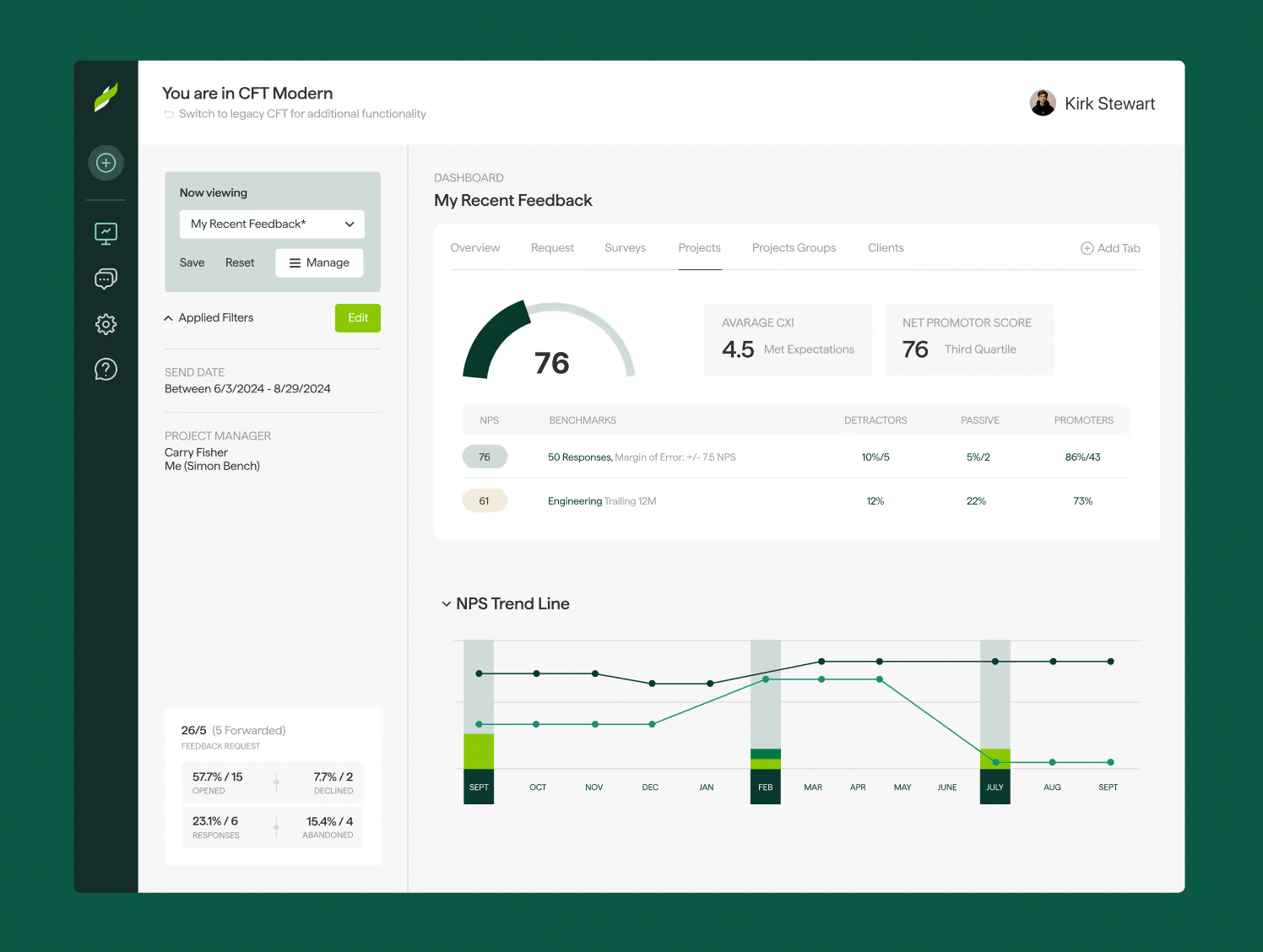
Top firms close this gap using data-driven approaches. Our Client Savvy platform provides real-time dashboards, automated alerts, AI-guided responses, and benchmarking to track sentiment across stakeholders and projects.
As a result, firms with structured closed-loop programs reduce repeat client frustrations by 83%, turning actionable insights into stronger, long-term relationships.
The Financial Upside: What CX Investment Actually Delivers for AEC Firms
A new study shows that more than 40% of professional services firms missed revenue targets, with many citing a lack of visibility into client utilization as a key cause.
In architecture and engineering, poor insight into client relationships can quietly cost millions. Here’s how CX investment changes the picture:
CX-driven growth: The hard numbers
When firms start tracking the CX ROI AEC firms can achieve, the financial impact becomes visible. Our research shows that AEC firms that measure CX ROI are 94% more likely to report above-average revenue growth and 113% more likely to achieve above-average profitability. Firms that go further and create dedicated CX roles perform even better, reporting 147% higher growth and 75% stronger profitability.
Why does this happen? Because firms that measure client experience identify relationship risks earlier, resolve communication gaps faster, and strengthen trust across project teams.
Regression analysis from the same study reinforces this connection. Nearly 69% of the variation in firm performance can be explained by how firms measure and manage client experience.
Other industry research points in the same direction. A 2025 Forrester study found that customer-focused companies grow revenue 41% faster, achieve 49% higher profit growth, and retain 51% more clients than competitors that do not prioritize customer experience.
For AEC firms that rely on long project lifecycles and repeat engagements, those differences compound quickly. In fact, PSMJ research shows that firms in the top quartile for client satisfaction report 23% higher revenue growth and 31% better employee retention.
The referral revenue multiplier
Client retention protects revenue, but referrals accelerate growth.
AEC firms operate in a reputation-driven market where developers, owners, and contractors regularly rely on peer recommendations. A satisfied client rarely just represents one project. They often influence multiple future opportunities.
This is where structured feedback programs create a powerful advantage. Net Promoter Score (NPS) surveys help firms identify promoters, the clients who are most likely to recommend the firm to others.
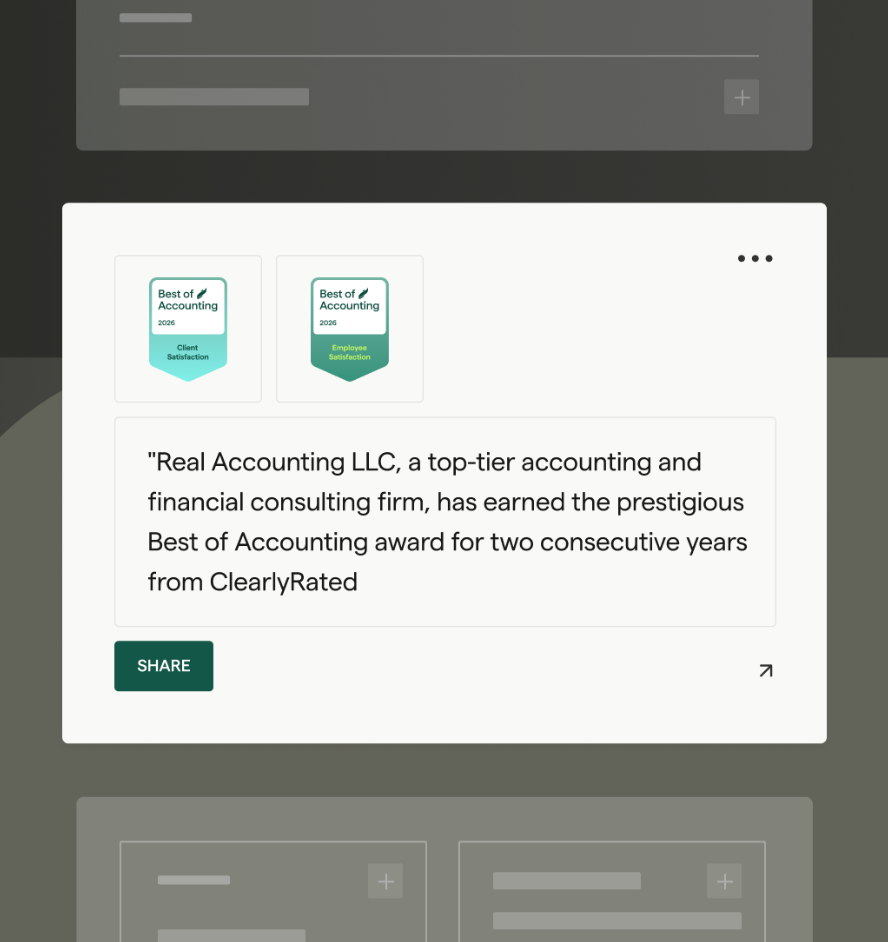
When firms actively engage those promoters, the impact becomes measurable. Our data shows that firms that systematically identify and activate promoters generate an average of $1.8 million in new business through reviews, testimonials, and referrals.
By comparison, generating $1.8 million through traditional business development efforts, such as cold outreach, networking, or advertising, would typically require significantly more time, effort, and cost. Activating existing promoters delivers the same growth more efficiently, with built-in trust and credibility.
Simple actions often make the biggest difference. Firms can invite satisfied clients to leave a review while the experience is still fresh, capture testimonials for case studies, or highlight successful projects in marketing and award submissions.
These actions serve two purposes:
- Strengthen the relationship with existing clients
- Build public proof of performance that attracts new prospects
Over time, those signals add up. Prospective clients often encounter reviews, awards, and success stories before they ever speak with the firm, which means new opportunities arrive with trust already established.
At-risk client recovery: The 83% save rate
CX programs also protect revenue that firms might otherwise lose.
Closed-loop feedback systems protect existing revenue by alerting leaders to dissatisfied clients. Our research shows that firms that respond to client feedback promptly recover 83% of at-risk relationships.
For AEC firms, the financial implications can be significant. If a firm identifies 50 at-risk relationships per year, each worth $200,000:
50 at-risk clients × $200K average value × 83% recovery rate = $8.3M in protected revenue
This is revenue that might otherwise disappear without visibility into client sentiment.
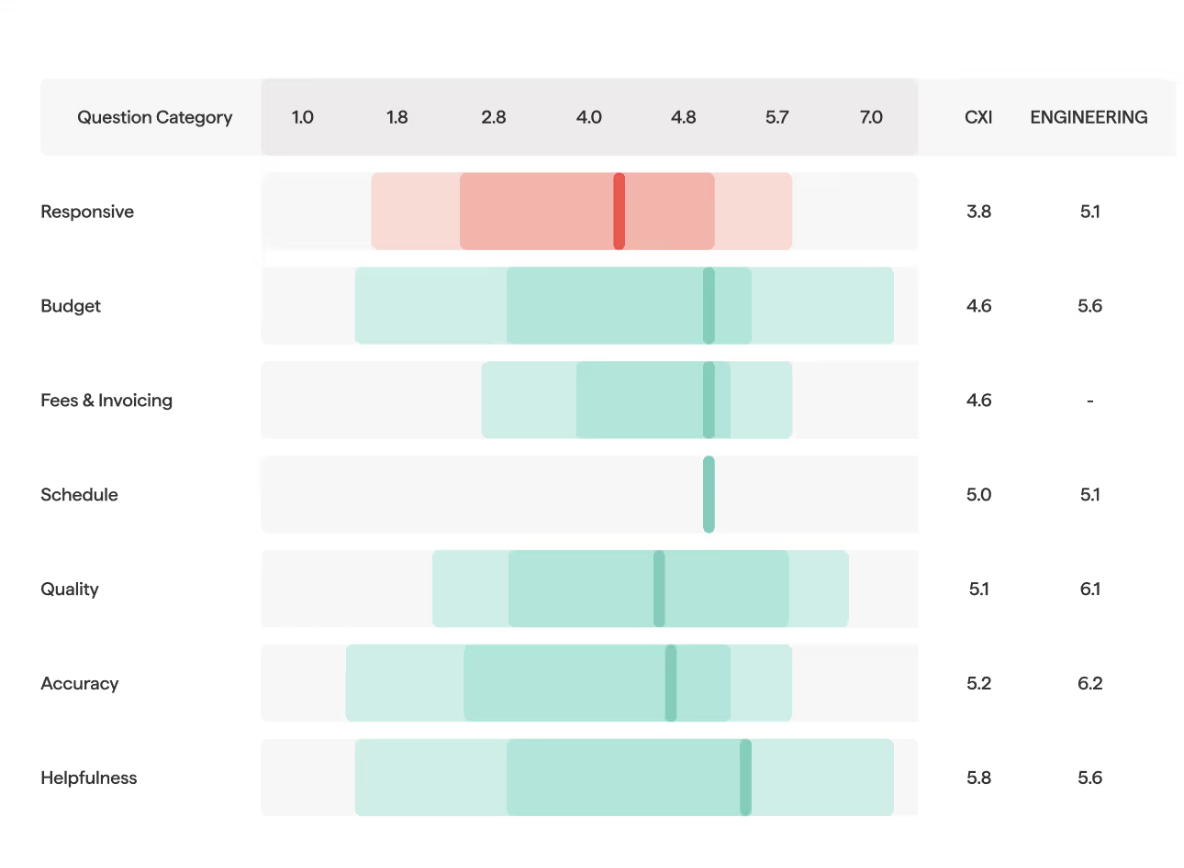
Technology plays an important role here. Our Client Savvy platform provides real-time detractor alerts, AI-generated response guidance, and dashboards that categorize relationships as thriving, stable, or at-risk.
By using stakeholder segmentation and acting quickly on feedback, leaders turn insights into long-term client loyalty while strengthening the client experience investment for AEC firms.
What Top-Performing AEC Firms Actually Do Differently
Earlier, we explored the financial impact of client experience. That raises a natural question:
Why do some firms consistently outperform the market while others struggle with churn and unpredictable revenue?
The answer often comes down to how intentionally firms manage client experience. Top-performing AEC firms view client experience as a core business philosophy, not just a task or marketing exercise. They prioritize relationships, embed accountability at every level, and empower teams to act on feedback continuously. This cultural commitment sets the stage for the operational practices that follow.
They treat CX as a business discipline, not a marketing initiative
Top-performing AEC firms approach client experience very differently from the rest of the market.
How so?
Instead of treating CX as a marketing activity, they embed it across leadership, operations, and project delivery. In fact, nearly 70% of top-performing firms now maintain a dedicated CX role or team, while only a small fraction of average firms make that investment.
Leadership alignment plays an equally important role. About 74% of top-performing firms achieve buy-in from regional or sector leadership teams, compared with roughly half of average firms. When CX becomes a leadership priority rather than a marketing initiative, firms start treating client relationships as measurable business assets.
Top firms also track revenue growth as a CX KPI, recognizing that strong client experience drives repeat work and referrals, and helps reduce churn in architecture firms.
They measure continuously, not annually
Despite this, many firms still collect feedback once a year or only after a project ends. Top-performing firms gather insights throughout the project lifecycle.
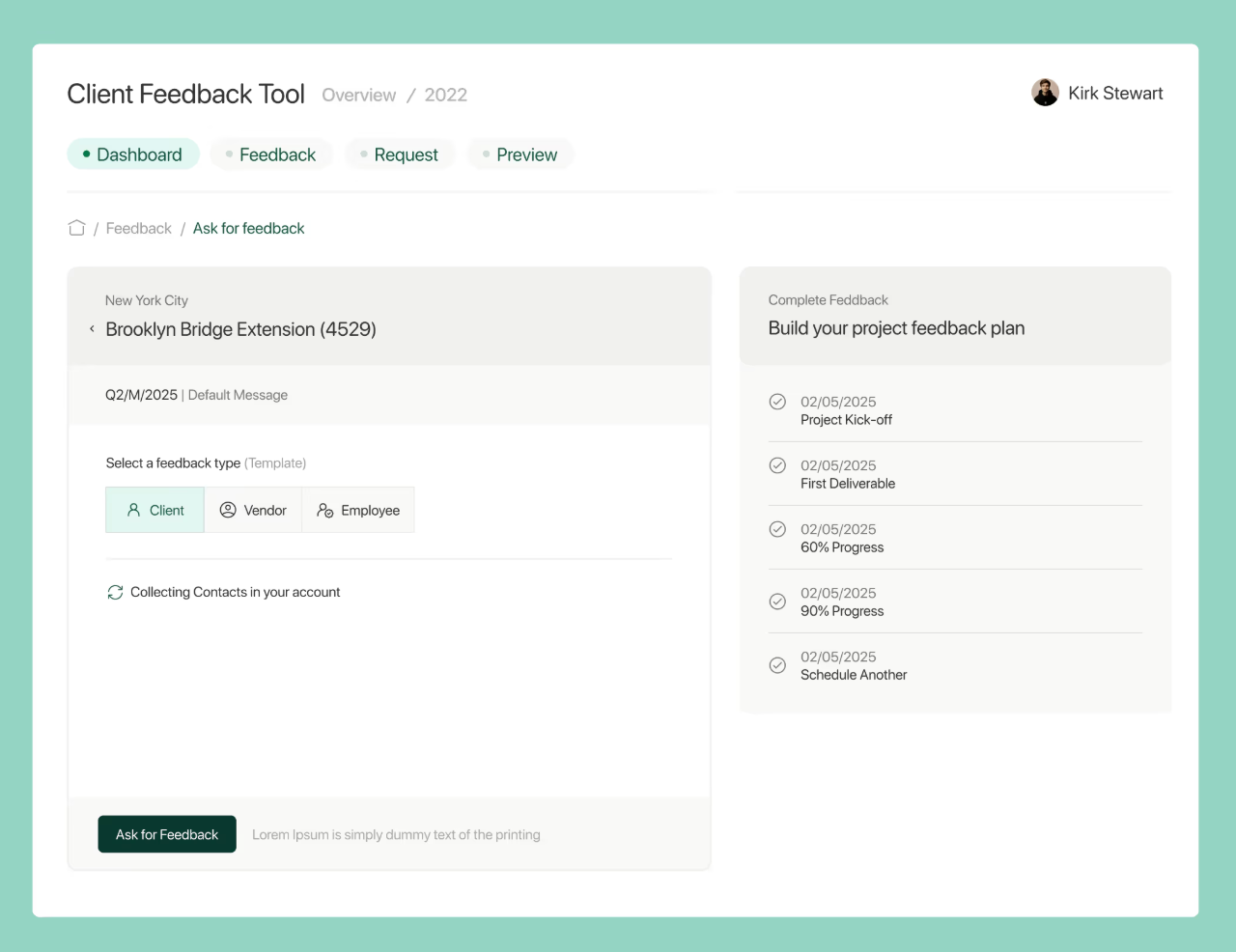
They deploy milestone-triggered surveys after key events such as project kickoff, design review, mid-construction, and project closeout. This approach captures the difference between client feedback and project feedback, revealing relationship risks that might otherwise go unnoticed.
Firms using continuous feedback programs report an average 17-point increase in NPS for AEC firms over time. Our research shows the median NPS for AEC firms is about 57, giving leaders a benchmark for comparison.
Leading firms also apply the Client Experience Indicator (CXI®) methodology, which identifies up to 380% more hidden pain points than NPS alone, helping teams address issues before they escalate.
They convert satisfaction into reputation assets
Finally, top firms do not let positive feedback sit in a database. They turn it into public proof.
Satisfied clients become Google reviews, published testimonials, and industry awards that strengthen the reputation. This visibility matters because 96% of buyers research firms online before engaging professional services providers.
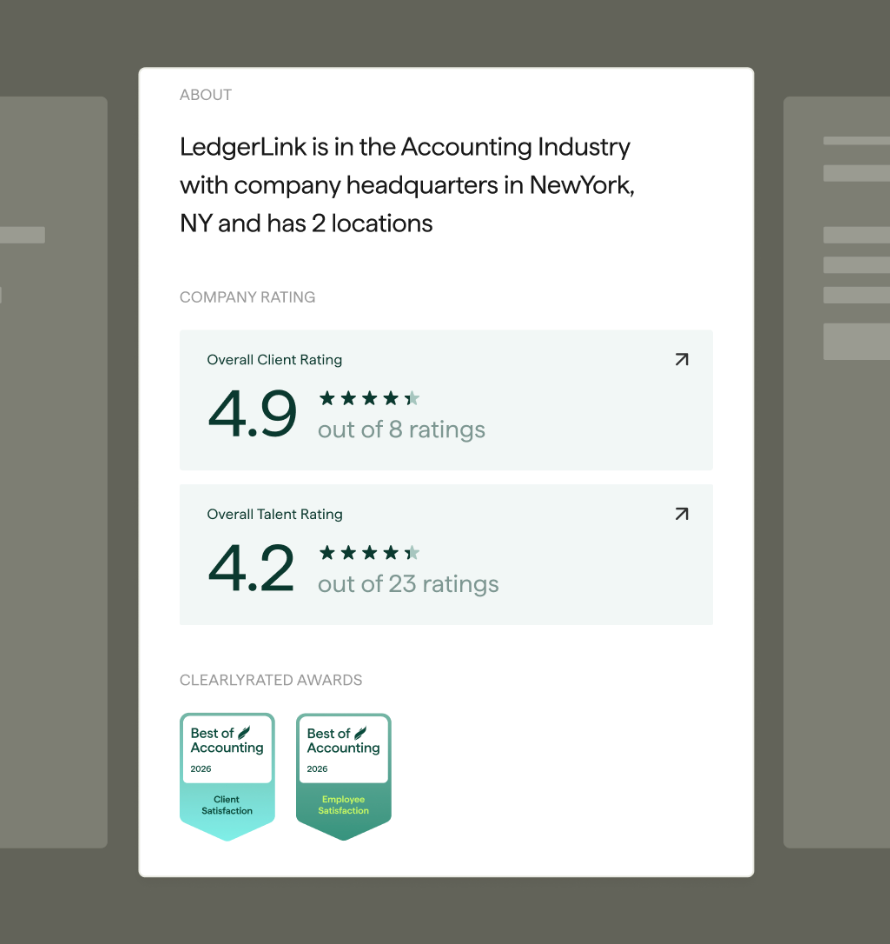
Our reputation management tools help firms transform positive survey responses into assets through review campaigns, testimonial programs, and recognition such as the Best of AEC™ awards.
With more than 1.5 million visitors each year searching ClearlyRated to evaluate B2B firms, these public signals help turn strong client experience into measurable business growth.
📌Also read: The Rise of CX Strategists in AEC
How to Build the Business Case: A Framework for Your Leadership Team
Many leaders recognize that client experience matters, but translating that value into financial terms can feel difficult.
A practical business case starts by turning client experience into measurable revenue impact, and it can be framed in five key steps.
Frame the problem
Start by calculating the financial risk of silent churn. Multiply your active clients by the average annual revenue per client, then apply the AEC benchmark silent churn rate of (say) 20%.
For a mid-size firm with 100 clients generating $200,000 each, that puts $4 million in revenue at risk.
Here's how:
- 100 clients = the number of active clients your firm currently has
- $200,000 per client = the average annual revenue generated by each client
Multiplying these gives the total revenue your firm earns from active clients in a year. In this example, it’s:
100 * $200,000 = $20,000,000
After applying the silent churn rate:
$20,000,000 * 0.20 = $4,000,000 at risk
This simple exercise turns abstract CX discussions into concrete numbers that leadership can evaluate.
Quantify the upside
Once leaders understand the risk, they can estimate the upside.
Even modest retention improvements can generate significant gains. For example, even a 10% reduction in churn protects $400,000, while a 15% reduction protects $600,000.
Additionally, a 20% reduction increases gains to $800,000, before accounting for repeat projects and referrals.
These figures show how modest improvements in client experience translate directly into revenue growth.
Define the investment
With both risk and upside established, the conversation shifts to execution. Building a CX program does not require a major infrastructure overhaul.
Most firms begin with an industry-specific CX platform, a dedicated or part-time CX owner, and a structured process for responding to feedback. Our Client Savvy platform helps operationalize this approach by automating surveys, analyzing sentiment, benchmarking performance against nearly 20 years of AEC industry data, and connecting insights to referrals and reputation management.
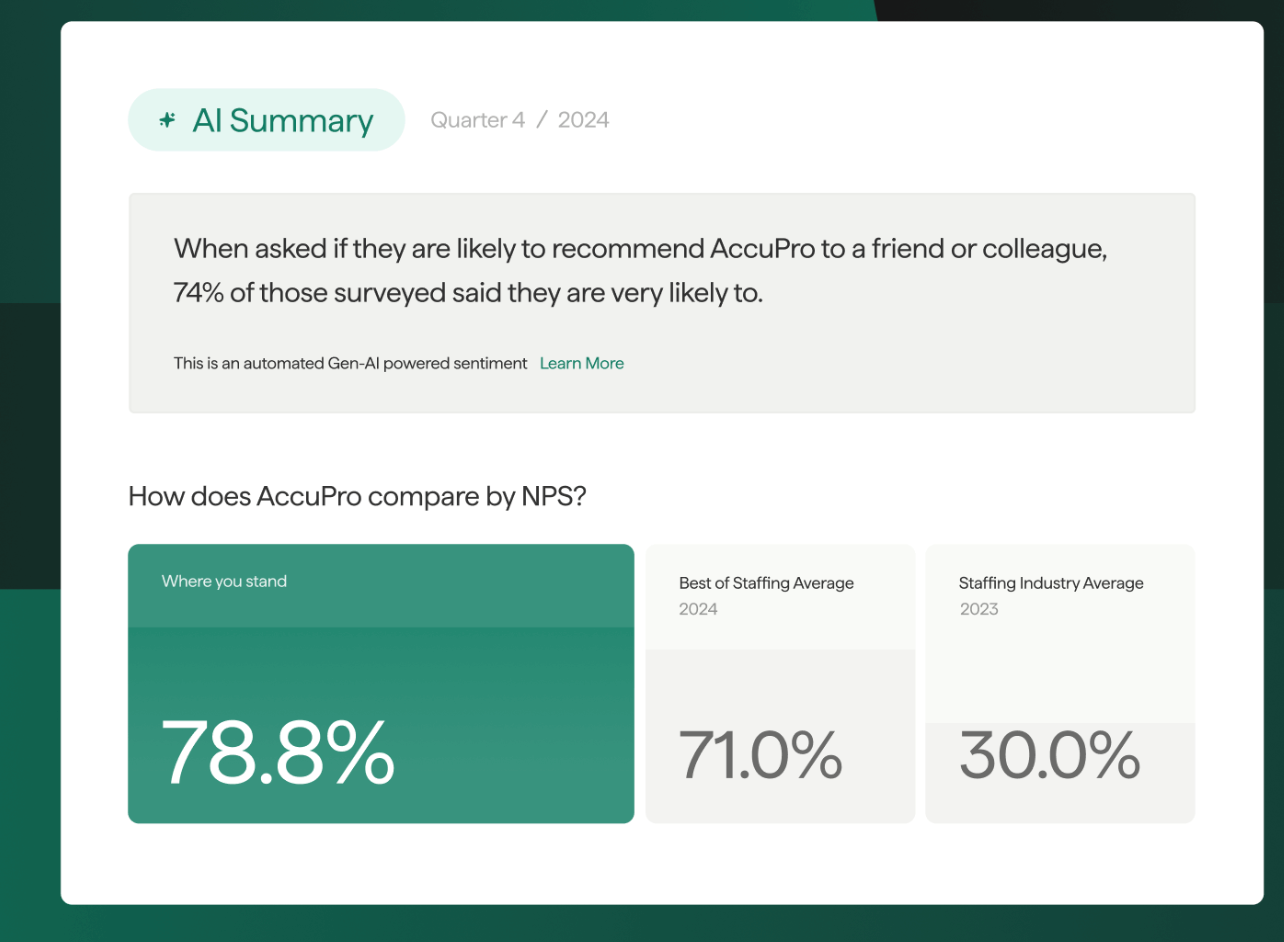
In turn, leaders can track progress using NPS trajectory, survey response rate, referral revenue from promoters, at-risk client recovery, and year-over-year client retention.
Set milestones
To sustain momentum, firms need clear checkpoints that connect CX efforts to business outcomes. Tracking improvements in NPS, increases in response rates, and growth in referral-driven revenue helps teams validate progress and refine their approach over time.
These milestones keep CX tied to measurable performance, not just intent.
Address inaction
Ultimately, the real question is not whether CX requires investment. It is what happens if the firm does nothing while competitors strengthen relationships, build stronger reputations, and quietly win the next projects.
Doing nothing can cost millions in revenue, lead to lost referrals, and weaken client loyalty. By quantifying risk, modeling the upside, defining investment, and highlighting the cost of inaction, leadership can see the clear business case for investing in CX for AEC firms.
📌Bonus read: Client Feedback vs. Project Feedback: What AEC Firms Need to Know
Build Your CX Advantage Before Your Competitors Do
With most AEC firms not yet measuring CX ROI, early adopters have a powerful opportunity to build stronger relationships and stand out in an increasingly competitive market.
For example, they can build systems that listen to clients, surface hidden frustrations early, and turn positive experiences into referrals, reputation, and repeat work. Instead of relying on assumptions about client satisfaction, leaders gain real visibility into how relationships evolve across the project lifecycle.
Our Client Savvy platform was built specifically to support this shift. Designed for AEC and professional services firms, it combines nearly 20 years of industry benchmarking data, AI-powered sentiment analysis, and tools that help teams measure feedback, respond quickly, and strengthen client relationships over time.
Ready to take action? Book your free demo and see how to build a compelling business case for investing in CX for AEC firms.
FAQs
What is the ROI of investing in CX for AEC firms?
The ROI is evident in higher client retention, stronger referrals, and increased profitability. Our research shows that firms measuring CX achieve a 94% higher likelihood of growth and 113% higher profitability.
How do you measure CX in architecture, engineering, and construction firms?
AEC firms measure CX through client feedback surveys, Net Promoter Score, and structured experience metrics. Leaders track client sentiment at project milestones and analyze feedback trends across clients, service lines, and project teams.
Why do AEC clients leave even after successful project delivery?
Clients often leave due to communication gaps, lack of transparency, or weak relationship management. Firms that only track project performance miss these issues. Structured feedback programs reveal the true drivers of client loyalty.
What percentage of AEC firms have a formal CX strategy?
Industry research shows that only a minority of AEC firms operate formal CX programs. Approximately 47% report no defined CX strategy, while only about 4.2% have fully embedded CX practices across their organizations.
How much does it cost to implement a CX program for an AEC firm?
Most firms start with a CX platform, structured feedback surveys, and a CX leader. Compared to the revenue at risk from client churn, the cost of implementing a CX program remains relatively small.

FAQs


%20(1).png)
.webp)
.png)
.png)





.png)
.png)

